
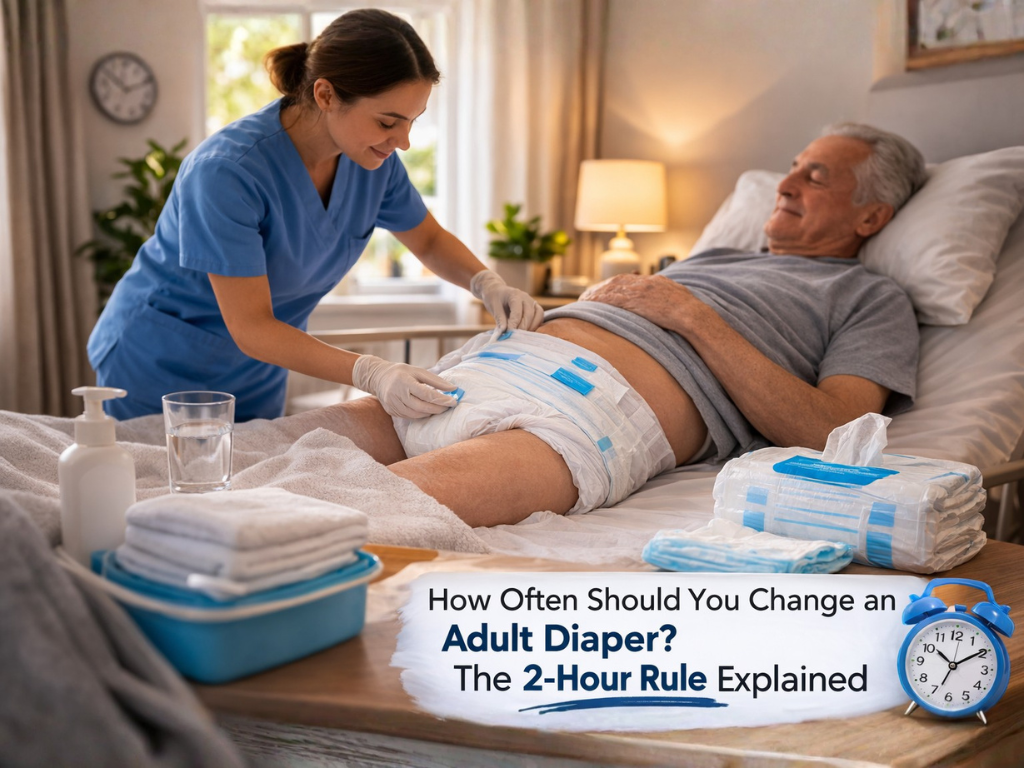
Adult incontinence affects millions of people in the United States, especially older adults and individuals with mobility challenges. Whether you are a caregiver, family member, traveler, or healthcare supplier, understanding how often adult diapers should be changed is essential for maintaining hygiene, comfort, and overall health. One of the most commonly recommended caregiving guidelines is the 2-hour rule, which helps reduce the risk of infections and skin problems.
What Is the 2-Hour Rule?
The 2-hour rule suggests checking and potentially changing an adult diaper every two hours. This guideline is widely used in caregiving environments such as hospitals, nursing homes, and home care settings. The goal is to ensure that moisture and waste do not remain against the skin for long periods.
While two hours is a helpful general guideline, the exact timing can vary depending on the person’s level of incontinence, mobility, and the absorbency of the product being used. Highly absorbent diapers may last longer, but regular checks are still important to maintain hygiene.
Why Frequent Changes Are Important
Changing adult diapers regularly is critical for preventing several health concerns:
Skin Irritation and Rashes
Prolonged exposure to moisture can weaken the skin barrier, leading to redness, rashes, and discomfort.
Urinary Tract Infections (UTIs)
Bacteria can grow quickly in a warm, moist environment, increasing the risk of urinary infections if diapers are not changed promptly.
Odor and Bacterial Growth
Leaving a saturated diaper on for too long may cause unpleasant odors and create an environment where bacteria thrive.
Typical Adult Diaper Changing Schedule
A practical schedule often depends on the individual’s needs:
- Light incontinence: every 3–4 hours
- Moderate incontinence: every 2–3 hours
- Heavy incontinence or bedridden individuals: every 2 hours
- Overnight: use high-absorbency overnight products and check in the morning
Regular monitoring is key. Caregivers should also check for leaks, odor, or visible wetness indicators, which signal that it’s time for a change.
Tips for Better Incontinence Care
Maintaining proper hygiene goes beyond just changing the diaper. Caregivers should gently clean and dry the skin during each change and consider using barrier creams to protect sensitive areas. Choosing high-quality, breathable incontinence products with strong absorbency can also improve comfort and reduce the frequency of leaks.
Final Thoughts
The 2-hour rule provides a helpful starting point for maintaining good hygiene and preventing infection. However, every individual’s needs are different. By monitoring comfort, skin health, and product performance, caregivers and users can create a routine that ensures both health and dignity while managing incontinence effectively.